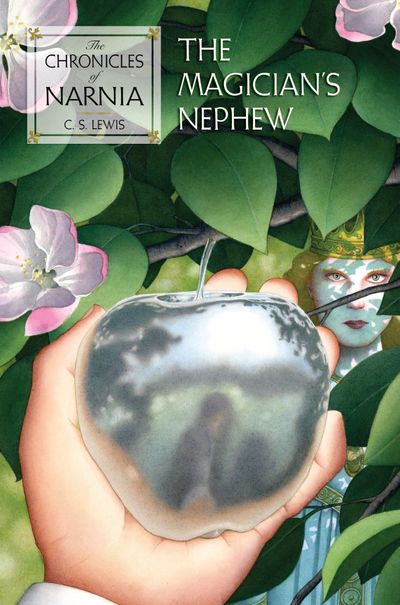
Prior to reading The Magician’s Nephew, C.S. Lewis’ prequel to the beloved children’s fantasy The Lion, the Witch and the Wardrobe, the word “Narnia” conjured images of a beautiful golden lion, four British children, and a lonely lamppost in my mind. After reading The Magician’s Nephew, I still imagine a lion, British children, and a lamppost, but I also have a greater understanding of the creation of Narnia. The Magician’s Nephew gives readers the whimsical and humorous backstory of the mysterious professor, icy White Witch, and, yes, the seemingly-random lamppost from The Lion, the Witch and the Wardrobe.
“What you see and what you hear depends a great deal on where you are standing. It also depends on what sort of person you are.”
It is certainly true that beauty can abound in simplicity. The writing in children’s books is often simple or straightforward, and The Magician’s Nephew isn’t an exception. As an adult with an often complicated life and a habit of reading about fictional complicated lives, I found the simplicity of Lewis’ writing refreshing. I didn’t need to ponder the inner thoughts and feelings of the characters; he would tell me through dialogue and actions. My brain was given a vacation, at least until I needed to Google British slang. Lewis maintained a childlike, bedtime-story tone throughout the book; I felt as if I was tucked in bed while my British grandfather recounted a fantastical adventure. My edition of The Magician’s Nephew also included black-and-white sketches of various scenes. They were simple, charming, and allowed me to further escape into the story.
“Now the trouble about trying to make yourself stupider than you really are is that you very often succeed.”
Fans of The Lion, the Witch and the Wardrobe‘s movie adaptation will delight in the numerous “Aha!” moments sprinkled throughout The Magician’s Nephew. After reading the book, you will be able to answer the following questions: why does the professor have a magic wardrobe nestled in his country estate? Why is an evil witch lurking in Narnia? Why is there a lamppost in the middle of a forest (my personal favorite)? Within just 202 pages, you’ll travel to London, a tranquil space between worlds, and a decimated, dying planet. Then, after witnessing Narnia’s wondrous beginning and exploring it on the back of a flying (and talking) horse, you’ll be plopped back into London. The Magician’s Nephew is truly a cozy, whimsical adventure.
“No great wisdom can be reached without sacrifice.”
Much of Lewis’ inspiration for the book was undoubtedly drawn from Biblical stories. Aslan could be a representation of the good embodied by God, and I found his dialogue reminiscent of God’s words within the Bible. The White Witch, then, could represent the silver-tongued Devil. Lewis even created his own version of the Garden of Eden with the Tree of the Knowledge of Good and Evil. When the White Witch, or Jadis, as she is known in The Magician’s Nephew, tempts Digory, the book’s protagonist, to eat the magical apple he has plucked from the tree, she is directly imitating the scene in Genesis where the Devil convinces Eve to disobey God and eat an apple from the Tree of the Knowledge of Good and Evil. Digory, however, doesn’t fall for Jadis’ tricks. I’m tempted to believe, because the book was written by a man in 1955, that Lewis is making subtle commentary on the strength of a man’s will versus a woman’s, but it’s possible I’m being too cynical. Regardless, it was fascinating to read Lewis’ spin on the Biblical stories of my childhood. Despite your personal beliefs, the theme of The Magician’s Nephew is clear: humanity is constantly struggling to fend off evil temptations in the pursuit of good choices, so we must remember that the rewards of morality will far outweigh those of immorality.
“All get what they want; they do not always like it.”
If you need an easy escape from reality, then I recommend picking up The Magician’s Nephew. It offers clear proof that adults can enjoy children’s titles. It is short and wonderfully written, with a timeless theme of the struggle between good vs. evil. If you want to give your brain a rest, then simply enjoy the creativity, magic, and humor. If you are willing to read between the lines, then you’ll have an entertaining time searching for hidden references, meanings, and allusions.
You might like The Magician’s Nephew if you enjoy:
- The movie adaptation of The Lion, the Witch and the Wardrobe
- Children’s chapter books
- Fantasy books
- Themes of good vs. evil
- Christian stories or novels with religious principles
Buy a copy of The Magician’s Nephew at the following links:
Check out the synopsis and reviews on Goodreads
 Hobbies & Happiness
Leave a comment