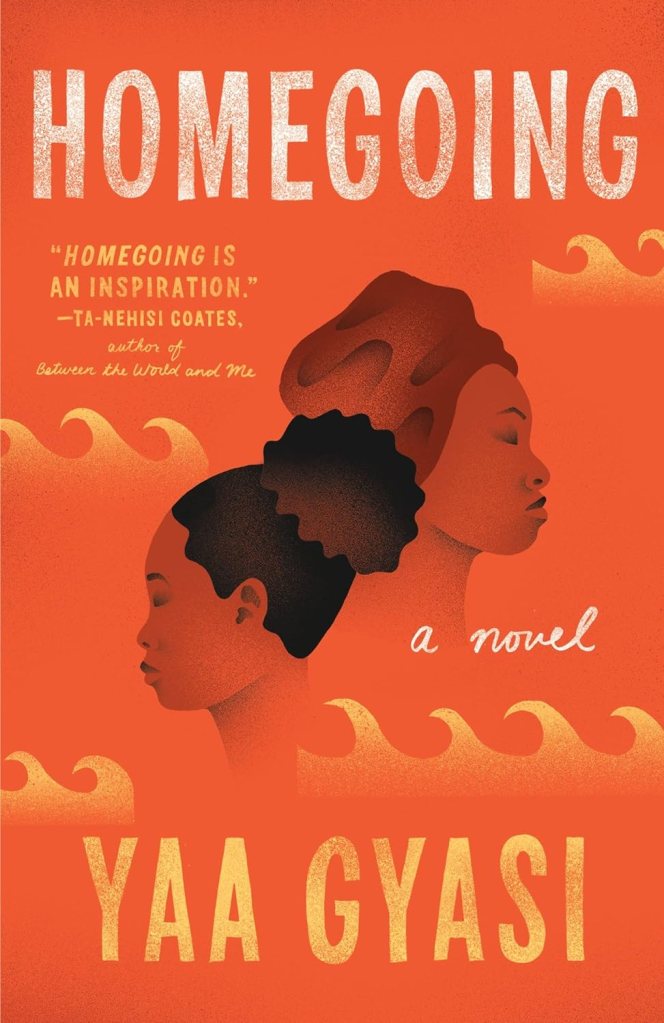
Homegoing is an important book. Yaa Gyasi’s historical fiction novel tells an unflinchingly brutal story of two West African families connected through a pair of half-sisters, whose lives are forever altered by colonialism and slavery. After one sister marries an Englishman while the other is kidnapped and enslaved, the reader follows the storylines of their descendants for more than two centuries. Although separated by circumstances and an entire ocean, the families are linked by the deep scars of occupation, slavery, and racism. Homegoing is technically fiction, but it’s impossible – and harmful – to dismiss the very real history that inspired it.
“Weakness is treating someone as though they belong to you. Strength is knowing that everyone belongs to themselves.”
Gyasi doesn’t beat around any bushes with her words or distract the reader from the story with poetic prose. Her writing style is unapologetically honest because the plot requires it. Her straightforward writing, however, is also paired with a lack of details. From the very first chapter, I longed for more words to describe the settings, which ranged from villages in Ghana to plantations, coal mines, and the streets of Harlem. Regardless, I thoroughly enjoyed the multiple points-of-view of both men and women, as well as the structural uniqueness of each chapter jumping to a character in a different generation. Gyasi masterfully crafts three-dimensional characters within limited pages. I only knew each person for a single chapter, but I nonetheless cared for and was invested in their lives. Gyasi’s direct prose is balanced with an inventive structure and rich characterization, allowing for meaningful and emotional chapters.
“It was the way most people lived their lives, on upper levels, not stopping to peer underneath.”
The plot of Homegoing is as raw as the writing style. The very first chapter involves a child regularly beaten by her mother, and just a few of the other topics include slavery, rape, murder, kidnapping, and drug addiction. Gyasi successfully shows the horrifying consequences of dehumanizing people for the sole purpose of making a profit. One of the challenges she faces with the book is skillfully telling the stories of fourteen people, each in different time periods, within just 300 pages. The plot is incredibly quick, and I did feel frustrated when a few chapters ended with too-little time to get to know the characters and their circumstances. Overall, although fast, the plot is bursting with complex, heartbreaking, and eye-opening storylines.
“We believe the one who has power. He is the one who gets to write the story. So when you study history, you must ask yourself, Whose story am I missing? Whose voice was suppressed so that this voice could come forth?”
Homegoing is a wonderful example of a book with a great plot and great characters. They exhibit many wonderful qualities, from courage to kindness to loyalty, while also struggling with several vices. They make brave choices in order to protect their loved ones, but they also make mistakes that negatively impact their descendants. They persevere through every insurmountable obstacle, and I’m grateful I was given the opportunity to witness perspectives and circumstances vastly different from those in my own life.
“The family is like the forest: if you are outside it is dense; if you are inside you see that each tree has its own position.”
Homegoing touches on many important themes, including humanity’s ability to endure despite unspeakable hardships, and the power of love in hopeless situations. In my opinion, however, the most prominent theme is that humankind can’t simply forget the past, no matter how much time passes or the efforts made to erase it. Whether people realize it or not, the past informs the future. For example, when one character, Esi, is kidnapped from her home in 1700s Ghana and enslaved, the impact will be felt by her descendants over centuries. Her family line will toil and suffer, both physically and mentally, and experience unimaginable heartbreak. Colonialism becomes slavery; slavery morphs into spiritual control; spiritual control is joined by the prison system, all to continue exerting power over the characters. The final character descended from Esi, alive during the late 20th and early 21st century, doesn’t know every detail of his ancestors’ stories and struggles, but they have nonetheless played a role in shaping his life.
“No one forgets that they were once captive, even if they are now free.”
With its mercilessly honest writing and plot, Homegoing is not a lighthearted novel. The reader isn’t sheltered from the injustice and brutality inflicted upon the characters at the hands of cruel people. You’ll develop surprisingly strong attachments to each character despite the brief chapters. Although fictional, the book is Gyasi’s reminder of one of the darkest, most shameful chapters in humanity’s past, and just how much it continues to shape the present and future.
You might like Homegoing if you enjoy:
- Historical fiction
- Multigenerational novels
- Books with themes on family, identity, trauma, and/or resilience
- Fiction novels focused on social issues
- Books about family legacies
Buy a copy of Homegoing at the following links:
Check out the synopsis and reviews on Goodreads
 Hobbies & Happiness
Leave a comment